The Role of Personality in Adapting to Hybrid Work Model
Baltas Group
Before the onset of the COVID-19 pandemic, most organizations expected employees to spend more than 80 percent of their time in the office. Today, only 10 percent do so, with the remaining 90 percent adopting a range of hybrid work models that allow employees to work virtually from out-of-office locations for some or most of the time.¹ While this work model was a forced shift due to the impact of the pandemic, it has subsequently become the preferred model and the new normal for many companies due to its flexibility, efficiency, convenience and cost savings for employees. In addition, it was seen that productivity can increase and be sustainable when the flexibility of work is balanced with a structured environment.¹
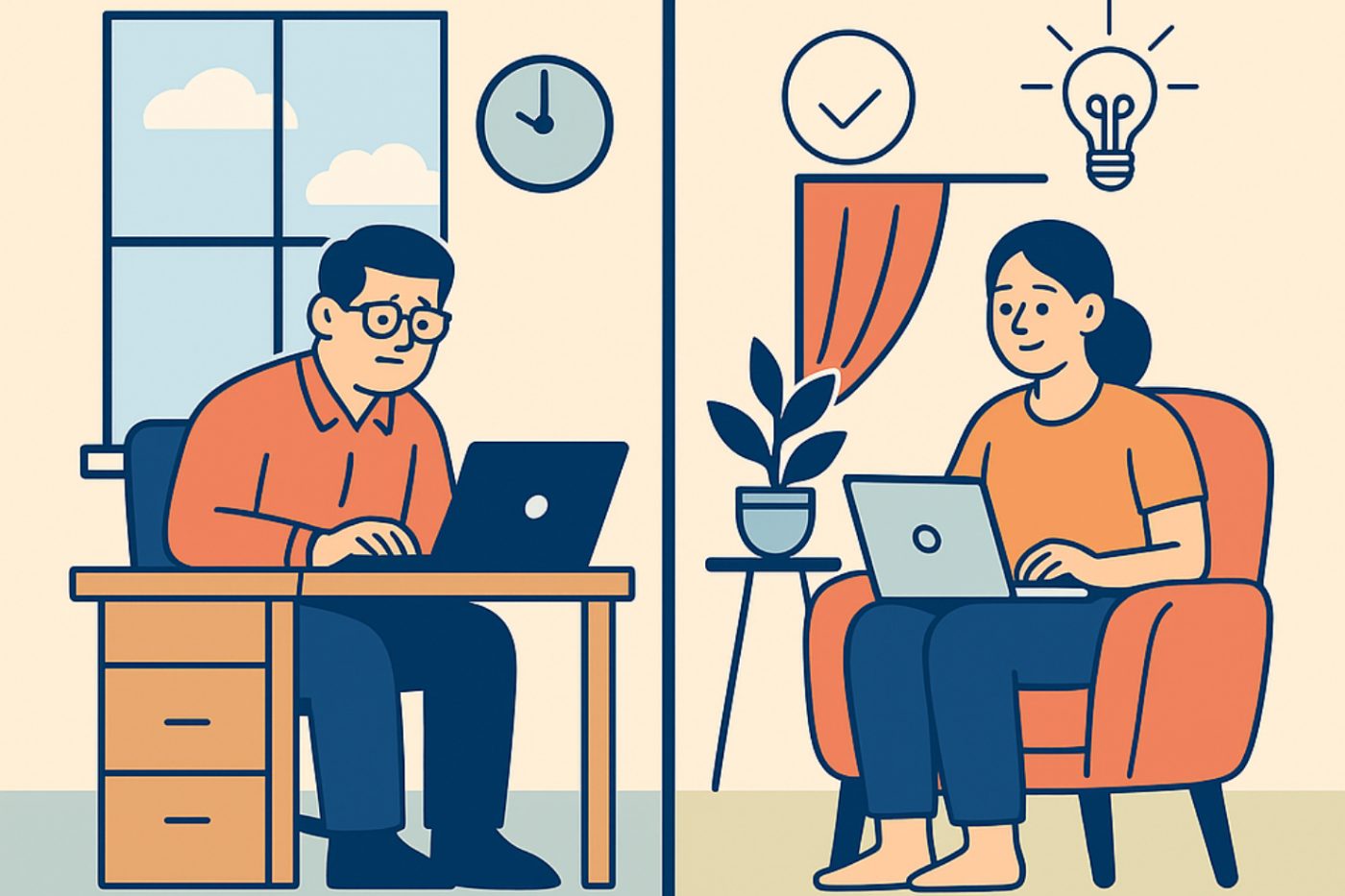
While the hybrid model is thought to offer convenience for employees by allowing them to work from both the office and home, the way each employee adapts may differ. Many organizational psychologists note that dispositions can be a vital determinant of people's work attitudes.² Personality refers to psychological traits that are stable over time, combine to determine emotional, behavioral, and cognitive patterns, and are explained as constructs of who individuals are.³ Employee performance is defined as the shared value of organizational activities that contribute directly or indirectly, positively or negatively, to the achievement of organizational goals. ⁴ At this point, personality becomes one of the main factors that determine the employee's performance in the workplace. In this article, the six basic personality dimensions in the personality structure measured by Baltas Personova, namely openness, cautiousness, emotional adjustment, agreeableness, introversion, extraversion and achievement orientation, are taken as a basis and hybrid work is evaluated in the context of personality dimensions.
Baltas Personova and hybrid work
Openness if we consider the advantages that individuals with high levels of openness experience in the hybrid working model, they do not hesitate to try new work tools, which can increase their productivity in the digital environment. In a study conducted by Gavoille and Hazans, it was found that employees with high levels of openness showed higher productivity in telecommuting conditions.⁵ Their openness to innovation and change can make them successful in quickly adapting to the changing dynamics of the work environment, such as working in the office or outside, preferring shared workspaces instead of fixed desks. On the other hand, individuals with low openness may have an advantage in adapting to the routine when they prefer to work in a certain order and work remotely on fixed days of the week; however, they may experience stress due to the variability in the workplace and conditions. Low openness is associated with difficulty adapting to change. Resistance to change may cause stress and negatively affect performance in situations such as being involved in different activities during office days.
Prudence the tendency of individuals with a high level of work habits to work in a planned and systematic manner may provide an advantage in terms of showing an effective work performance and completing their tasks on time. As a possible outcome of the hybrid model, the stress caused by instantaneous tasks in the changing work tempo may be disadvantageous for this personality dimension. On the other hand, employees with low cautiousness can adjust their working hours and environment to their needs in the hybrid work model, and this independence can be advantageous in terms of providing them with the opportunity to make quick decisions and come up with flexible solutions.⁶ However, due to their difficulties in planning and self-discipline, they may not be able to manage time management and work organization effectively, which may lead to a decrease in the quality of work. Thus, the flexibility in a hybrid work environment can help these individuals to adapt to rapidly changing circumstances, but sometimes this can lead to inefficiency due to a lack of organized structure.⁷ However, the risk that they have a low tendency to delay gratification, as opposed to high caution, can also cause them to become easily complacent in a remote work environment.
Emotional harmony the factors such as high level individuals being successful in coping with stress, approaching uncertainties with agility, and being able to maintain their productivity unconditionally may create advantages in terms of adapting to physical changes in the hybrid work environment and maintaining emotional balance. However, their emotional reactions may be interpreted as not paying enough attention to the feedback of their teammates in the remote work environment, which may lead to communication problems. On the other hand, the fact that individuals with low emotional adjustment are easily affected by stressful conditions and uncertainty creates anxiety can be a disadvantage in a dynamic such as a hybrid work environment. The pressure to be “seen” and “evaluated” in the office can be quite challenging for these individuals. However, with the possibility of this pressure decreasing when working from home, the person may be more successful in managing their stress.
Reconciliability It is seen that individuals with high levels of empathy adopt more constructive conflict resolution strategies.³ At the same time, the tendency to have high empathy can give an advantage in intra-team communication. While their tendency to cooperate may provide an advantage in terms of being able to easily adapt to the conditions seen in the hybrid model, such as different working environments and being in shared workspaces rather than fixed places, the tendency to avoid conflict under pressure may have disadvantages such as remaining passive or not expressing oneself correctly in a remote working environment. On the other hand, individuals with low agreeableness can work more independently and in their own way with the freedom provided by hybrid working. However, they may experience communication difficulties or conflicts on the limited days when they come together in the office, in moments that require quick decision-making, group cohesion or empathy.
Introversion-extroversion it can be said that the extroverted dimension is energetic, cheerful, dominant, assertive and interested in others, while the introverted dimension is timid, calm and prefers solitude.³ In this context, while the extroverted personality may see office days as an opportunity to socialize in the hybrid model, it may be an advantage to be sociable in exchanging ideas during teleworking days. However, remote working days may also be a disadvantage in cases such as being an obstacle to social interaction and being uncomfortable working alone. Considering the factors such as introverted employees' preference for silence and their relative lack of interest in the social world3 , it may be an advantage for them to feel safer on remote working days in terms of their need for silence and individuality, and for this to feed their productivity. However, it may create a disadvantage by negatively affecting the intense social interactions of office days.
Achievement orientation; It is associated with a personality dimension that defines goal-oriented, motivated, competitive individuals. In this context, while the goal-oriented work culture of employees with high achievement orientation offers an advantage in terms of easily adapting to the hybrid model by enabling them to see the flexibility of the hybrid model in terms of working hours and location as an opportunity, their competitive nature may create a disadvantage in the work environment due to their tendency to question the visibility of their work in the hybrid model and to experience conflict. Individuals with low achievement orientation may find it difficult to compete and lead. The hybrid work model provides independence in the out-of-office environment, meaning that employees can choose their own schedules and workspaces. This flexibility can be an advantage for individuals with low achievement orientation, allowing them to work under less pressure.⁸ However, the same independence and flexibility can also cause them to struggle with goal setting and motivation. Lack of external control can negatively affect their productivity.⁶
Conclusion
The hybrid model contains advantages and disadvantages according to different personality dimensions. Organizing workplaces by taking into account the personality structures of their employees can increase employee satisfaction and performance efficiency. In this context, recognizing the team through personality analysis and doing this with a scientifically valid personality inventory will give the most consistent result. Inventories with a scientific basis should be preferred for a comprehensive and reliable analysis. Hybrid working is being accepted as a new norm in business life. You can access the New Norms publication of our Source Magazine from the link https://kaynakbaltas.com/dergiler/yeni-normlar/ , and you can read Prof. Dr. Acar Baltas's article "Returning to Office and Life in a World of Changing Norms" and more topics related to the hybrid model in detail
References
- McKinsey & Company. The state of organizations 2023 [Internet]. McKinsey & Company; 2023 [cited 2025 Mar 28]. Convenient access: https://www.mckinsey.com/
- 2Bui HT. Big Five personality traits and job satisfaction: Evidence from a national sample. J Gen Manag. 2017;42(3):21–30.
- Basım HN, Çetin F, Tabak A. The Relationship of Five Factor Personality Traits with Interpersonal Conflict Resolution Approaches. Turk Psikoloji Derg. 2009;24(63).
- Tenderis A, Kazdal ÖS. A conceptual evaluation on the effect of hybrid work model on organizational commitment and employee performance. Ankara Univ Sos Bilim Derg. 2023;14(1):1–11.
- Gavoille N, Hazans M. Personality traits, remote work and productivity. IZA Discussion Paper No. 15486 August 2022 [İnternet]. Convenient access: https://docs.iza.org/dp15486
- Hertel G, Geister S, Konradt U. Managing virtual teams: A review of the literature. Team Perform Manag. 2005;11(1/2):6-11.
- Zimmerman BJ. Investigating self-regulation and motivation: Historical perspectives and future directions. Am Educ Res J. 2002;39(4):527-553.
- John OP, Srivastava S. The Big Five trait taxonomy: History, measurement, and theoretical perspectives. In: Pervin LA, John OP, editors. Handbook of Personality: Theory and Research. 2nd ed. New York: Guilford Press; 1999. p. 102–38.
Meet Personova Right Now
You can contact us to get information about Personova developed by Baltas Group.
Phone
+44 7557 347 733Address
63-66 Hatton Garden
London, England, EC1N 8LE